How to Write a Report Analysis Note for a Decision-Maker
What is a Report Analysis Note?
As a consultant, you analyse the report (NAS, UDISE+, PGI) and write a note for the decision-maker outlining areas that require their attention.
Consider an Education Secretary or a State Project Director for Samagra Shiksha. The UDISE+, National Achievement Survey or Performance Grading Index are periodic reports that are highly relevant to them.
Why?
-
These reports provide a (relatively) objective assessment of the state’s performance. The decision-maker can learn about which of their activities have worked well, and which areas need additional focus.
-
These reports tend to cause media frenzy. If the state does well, it’s a moment for the political brass to claim victory. If the state does poorly, it’s the decision-makers job to defend themselves in front of the public eye and the political leadership.
How can you support the decision-maker in this situation?
Here’s a three-step guide that has worked well for me.
Who is the Decision-Maker? What are they going to do with this report?
Are they the Secretary, Project Director, District Officer, Block In-charge, or a School Leader? Each of these positions comes with a different set of roles and responsibilities. Plus, the geographical area of influence differs as well.
- A state-level senior officer is likely going to call a meeting to discuss the next steps.
- A district-level officer might want to visit the circles/schools that have performed poorly.
- Someone involved with training and capacity building at the SCERT or DIET would look for areas that require improvement.
All officers will try to compare themselves to others. So an SPD would want to know which other states have done better or poorer than them. A district officer would want to see where their district ranks within the state. All of them would likely want to know how the performance has changed in comparison to the last time.
What parts of the report are relevant for them?
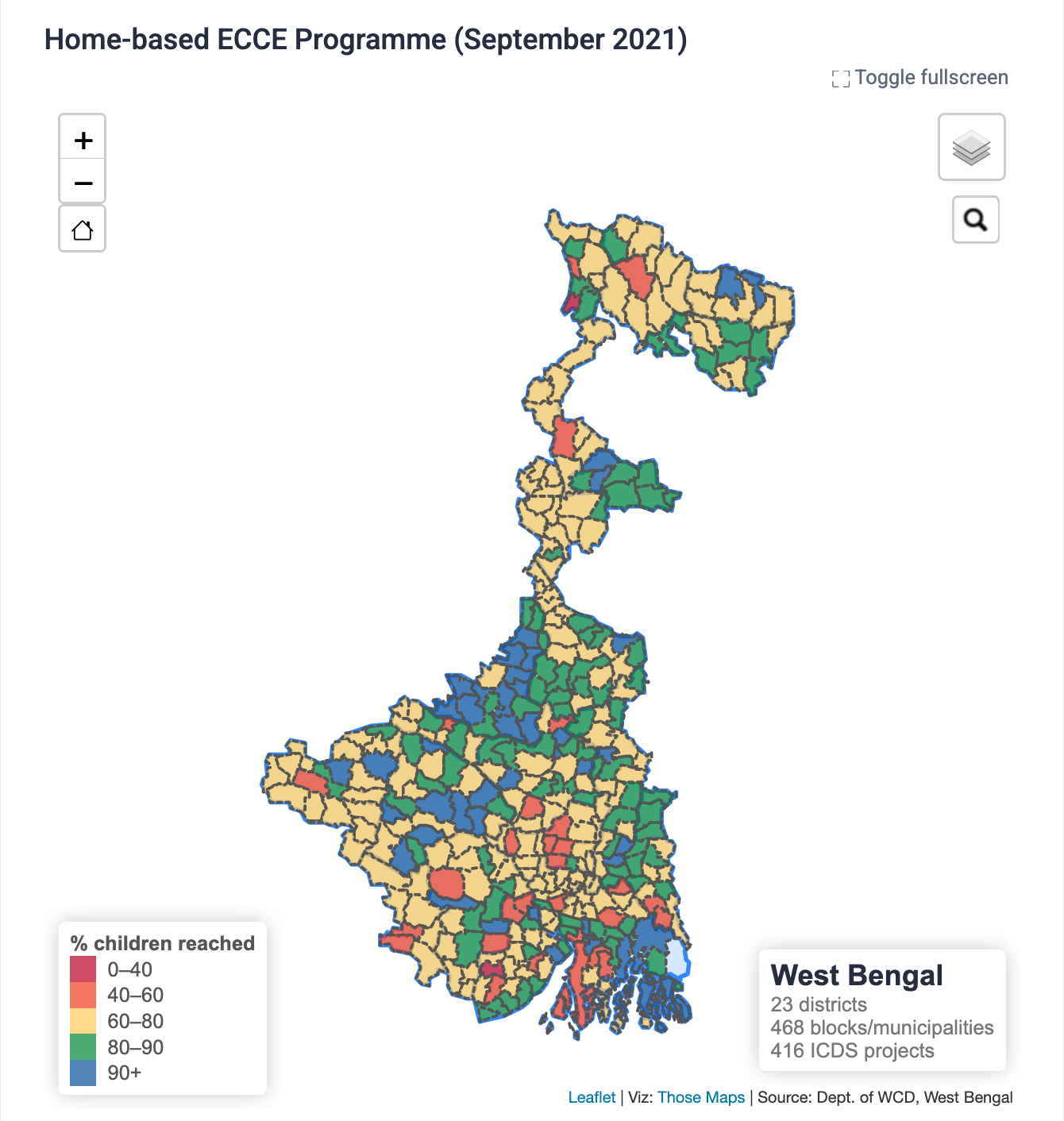
The same data points can be relevant in different ways. Consider the block-wise performance for a given outcome.
Source: Author's work
- A state project director will look at the map and see which regions are doing poorly. They will identify discrepancies within a district. They will try to match the map’s data against the information they have from the ground.
- A district officer will mostly look within their own district and validate whether their intuitive understanding of “good” and “bad” blocks is correct or not. Anything that does not fit this will be an open question that they would want to take action on.
- A block officer will check how they rank against other blocks in their district. If they have done poorly, they’ll try to look for indicators where they have done well. They will also try to prepare a list of reasons why their block performed poorly.
Do they have the context on the report? Do they need recommendations?
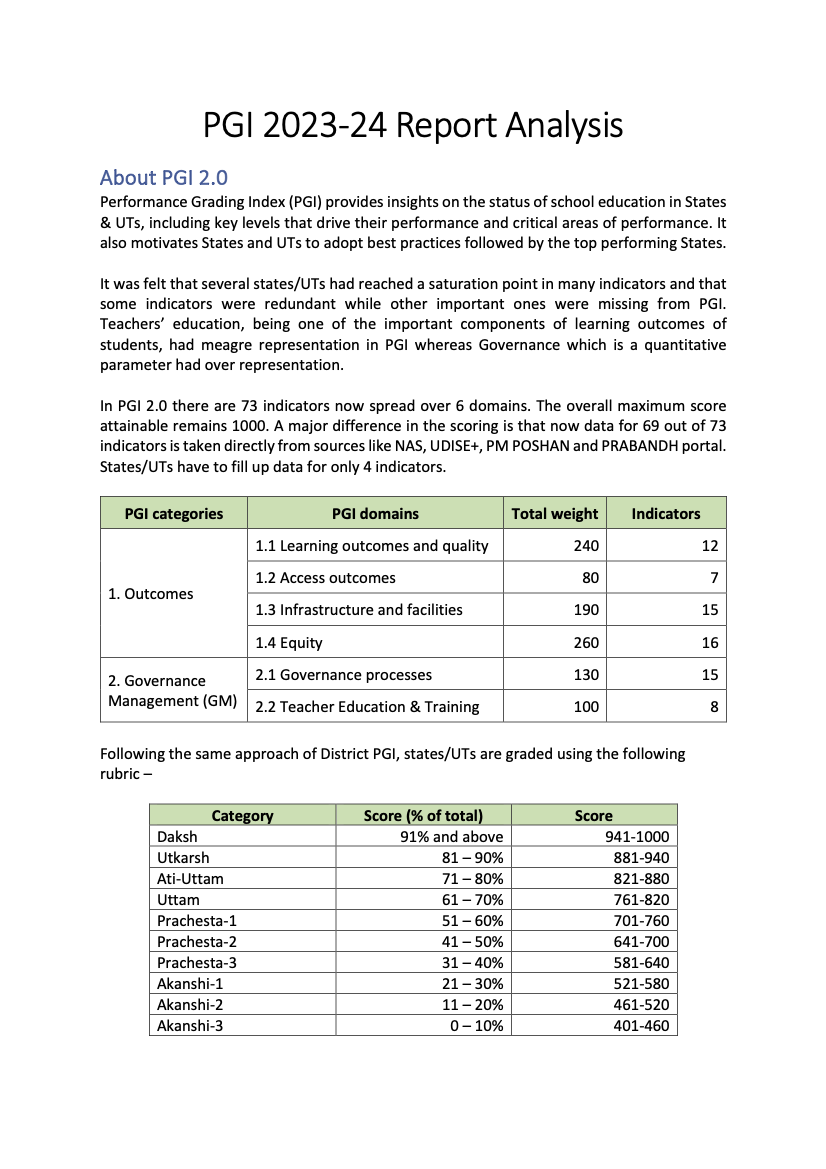
Decision-makers are busy people. They suffer through the costs of context-switching every day. It’s your job to make switching contexts easy for them. The simplest way to do it is to have a About Report section on the first page that covers –
- What is this report, who is it published by
- What is the methodology followed in this report
- Is there anything that stands out for the decision-maker (e.g. not all districts in their state were covered)
Source: Author's work
It helps to dedicate the first page to this meta information and start the analysis on the next page. If the actual analysis starts halfway through the first page, the reader is forced to scan the entire page, which is wasted cognitive effort.
Recommendations are helpful if they are direct, sparse, and relevant.
- Direct: Circumlocution and vagueness are sins. “Add a section for teaching-learning processes to the supervisory checklist” is direct. “Improve the supervision process” is vague.
- Sparse: The decision-maker isn’t looking for you to do their job. Unless they explicitly asked for your recommendations, don’t go overboard. A couple of suggestions is plenty.
- Relevant: A greenfield project that worked well in another context may be useful here but it’s not really something you recommend in this type of a note. Relevant recommendations are usually ones that can be easily implemented on top of existing activities.
Remember, stopping something is also a valid recommendation. Don’t let the activitiy bias get to you.
Again, this page is opinions, not gospel. Use your better judgement. For example, in most cases you won’t need a context section for a note analysing the latest UDISE+ report because everyone in the sector is usually quite familiar with it. Unless the decision-maker has joined the education department recently - in which case it would help them get up to speed with why UDISE+ is relevant.
Relevant: